
Post
Orthopedic Dog Bed Review: Does It Really Help Joint Pain?
May
As dogs grow older, their bodies naturally change in the same way humans do. Joints become less flexible, cartilage wears down, and conditions such as arthritis or hip dysplasia may appear. Even active dogs that have spent years running, jumping, and playing can eventually experience stiffness or discomfort, especially after long periods of rest.
One factor that is often overlooked is where and how dogs sleep. Because dogs spend a large portion of their lives resting—often 12 to 18 hours per day—their sleeping surface plays a major role in their comfort, recovery, and joint health. A poor-quality bed can increase pressure on joints and make stiffness worse over time, while a properly designed bed can reduce discomfort and improve mobility.
This is why orthopedic dog beds have become increasingly popular. They are marketed as a solution for joint pain, aging pets, and recovery support after injury or surgery. But the real question is whether they truly make a difference or if they are just a marketing upgrade over regular dog beds.
The answer is more nuanced than a simple yes or no. In many real cases, orthopedic dog beds do provide meaningful benefits—but only when they are properly designed with quality materials.
What Exactly Is an Orthopedic Dog Bed?
An orthopedic dog bed is specifically designed to support a dog’s bones and joints using pressure-relieving materials rather than soft stuffing alone.
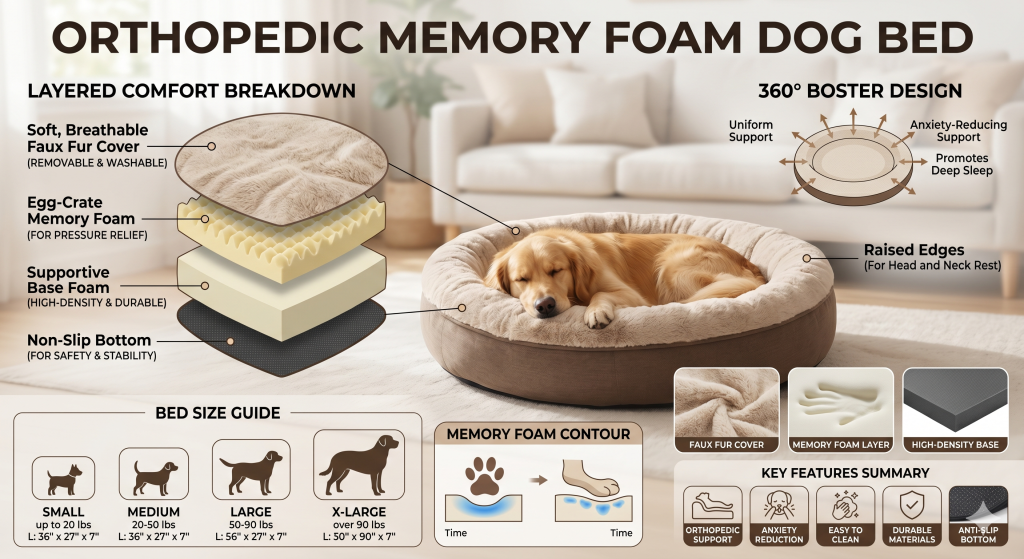
Unlike traditional dog beds that are often filled with polyester fiber or low-density foam, orthopedic beds typically use:
- High-density memory foam
- Multi-layer support foam
- Pressure-relief construction systems
These materials are designed to distribute body weight evenly and reduce stress on key joints such as hips, elbows, knees, and the spine.
A properly designed orthopedic bed prevents the dog from “sinking” too deeply into the surface, which is one of the main causes of joint pressure and discomfort in standard beds.
Veterinary and pet care sources explain that orthopedic beds are especially useful for senior dogs and those suffering from joint-related conditions because they provide more structured support compared to conventional bedding.
How Orthopedic Dog Beds Actually Reduce Joint Pain
To understand whether these beds work, it’s important to understand what causes joint discomfort in dogs during rest.
When a dog lies on a soft or thin surface, their body weight is not evenly supported. Instead, pressure concentrates on certain points—especially:
- Hips
- Elbows
- Shoulders
- Spine
Over time, this uneven pressure can increase stiffness and make it harder for dogs to get up after sleeping.
Orthopedic beds address this issue in several key ways:
1. Pressure Distribution Across the Entire Body
High-density foam spreads the dog’s weight evenly across the surface instead of allowing the body to sink into specific points.
This reduces stress on joints and helps prevent pain buildup during long periods of rest.
2. Support for Aging and Weak Joints
As dogs age, their joints lose cushioning. Orthopedic foam acts as an external support system that helps compensate for this natural loss.
Instead of hard surfaces putting pressure directly on joints, the foam absorbs and redistributes weight more effectively.
3. Improved Sleeping Posture
A supportive surface encourages better spinal alignment while the dog is lying down.
This reduces unnatural bending or twisting during sleep, which can contribute to stiffness when the dog wakes up.
4. Reduced Morning Stiffness
One of the most commonly reported improvements from pet owners is that dogs appear less stiff in the morning after switching to an orthopedic bed.
They may stand up more easily, move more comfortably, and show fewer signs of discomfort after resting.
Do Dogs Actually Feel the Difference?
In many real-world cases, yes—but results vary depending on the quality of the bed.
Dog owners often report noticeable changes such as:
- Dogs choosing the orthopedic bed more frequently
- Less hesitation when standing up after sleeping
- Reduced limping or stiffness in senior dogs
- Longer, deeper rest periods
However, these improvements are most commonly seen in dogs that already have joint issues or are entering their senior years.
Younger dogs without joint problems may not show obvious differences because they do not yet require that level of support.
A key insight from pet owners is that not all orthopedic beds are equal. Low-quality versions with thin foam often fail to provide meaningful improvement, while high-density foam beds produce more noticeable results.
What Makes a Good Orthopedic Dog Bed?
Not every bed labeled “orthopedic” actually delivers proper support. The effectiveness depends heavily on construction quality.
Here are the most important factors:
1. Foam Density (Most Important Factor)
High-density memory foam provides real support by resisting collapse under weight.
Low-density foam or fiber filling may feel soft initially but flattens quickly, reducing any orthopedic benefit.
2. Thickness of the Bed
Thickness directly affects how well the bed supports a dog’s body.
- Small dogs: at least 2–3 inches
- Medium dogs: 3–5 inches
- Large or heavy dogs: 5–7 inches or more
Thicker beds prevent the dog from reaching the hard floor underneath.
3. Layered Construction
The best orthopedic beds often use multiple layers:
- Top comfort layer
- Supportive middle layer
- Firm base layer
This combination helps balance softness and stability.
4. Bed Shape and Structure
Different shapes serve different needs:
- Flat beds: better for stretching and movement
- Bolstered beds: provide head and neck support
Dogs with anxiety or joint pain often prefer beds with raised edges for added security.
5. Non-Slip and Waterproof Base
Older dogs especially benefit from stability. A non-slip bottom prevents movement when getting in or out of the bed, reducing strain on weak joints.
Waterproof covers also help protect the foam from accidents and extend the bed’s lifespan.
Limitations of Orthopedic Dog Beds
While orthopedic beds offer clear benefits, they are not a complete solution for joint disease or chronic pain.
They cannot:
- Cure arthritis
- Reverse joint degeneration
- Replace veterinary treatment
- Completely eliminate pain in severe cases
Instead, they should be seen as a support tool that improves comfort and reduces stress on joints.
Another limitation is quality inconsistency. Many cheaper “orthopedic” beds use marketing terms without real high-density foam inside, which leads to disappointing results.
Real-World Experiences from Pet Owners
Feedback from dog owners provides useful insight into how these beds perform in everyday life.
Positive experiences:
- Older dogs sleep more comfortably and longer
- Reduced stiffness after naps or overnight sleep
- Dogs prefer the bed over hard floors or couches
- Easier movement when getting up
Mixed experiences:
- Some dogs take time to adjust
- Low-quality foam loses shape quickly
- Certain dogs prefer cooler surfaces in hot weather
A common conclusion among pet owners is that foam quality determines success more than brand name or price alone.
Are Orthopedic Dog Beds Worth the Money?
For many dog owners, the answer is yes—but with conditions.
They are worth it if:
- Your dog is aging or has arthritis
- Your dog is a large breed with heavy joint pressure
- You want to improve long-term joint comfort
- You choose a high-density, well-reviewed product
They may not be necessary if:
- Your dog is young and healthy
- You are looking for a basic, inexpensive sleeping surface
- You choose low-quality foam products with no real support
Final Verdict
Orthopedic dog beds can genuinely help with joint pain by improving support, reducing pressure points, and encouraging healthier sleeping posture. For senior dogs and dogs suffering from arthritis or hip issues, they often make a noticeable improvement in comfort and mobility.
However, the effectiveness depends heavily on build quality. A well-made orthopedic bed with high-density foam can significantly improve a dog’s quality of life, while a cheap imitation may offer little real benefit.
In the end, an orthopedic dog bed is not a miracle cure, but it is a practical and valuable comfort upgrade that can help dogs rest better, move more easily, and experience less joint discomfort over time.
