
Post
Essential Oil Diffuser Review: Relaxation and Better Sleep
May
An essential oil diffuser has become a popular wellness device in modern homes, especially for people looking to reduce stress, improve relaxation, and support better sleep. At first glance, it seems like a simple gadget that releases fragrance into the air. But in reality, it’s often used as part of a nightly routine to create a calmer environment and signal the body that it’s time to rest.
With increasing stress levels, screen time, and sleep problems, many people are turning to aromatherapy tools like diffusers as a natural way to unwind.
But the key question is: do essential oil diffusers actually help with relaxation and sleep, or is the effect mostly psychological?
Let’s go deeper and analyze it properly.
What Is an Essential Oil Diffuser?
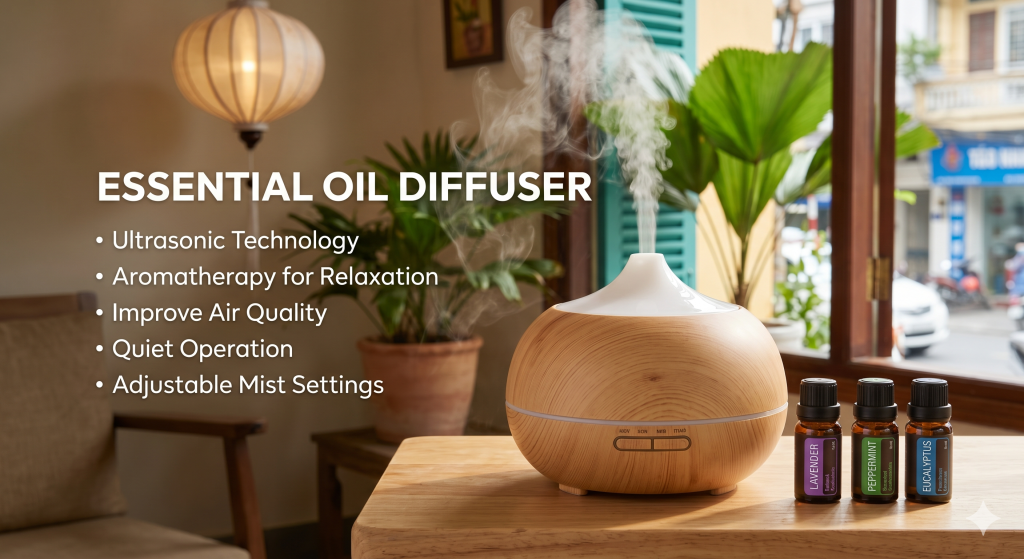
An essential oil diffuser is a device that disperses essential oils into the air in the form of a fine mist or vapor. It spreads fragrance throughout a room to create a calming environment.
Most common types include:
- Ultrasonic diffusers (water + vibration)
- Nebulizing diffusers (pure oil mist, stronger scent)
- Evaporative diffusers (fan-based diffusion)
- Heat diffusers (warming oil to release scent)
Aromatherapy effect≈f(scent exposure, duration, environmental context)\text{Aromatherapy effect} \approx f(\text{scent exposure},\ \text{duration},\ \text{environmental context})
Ultrasonic diffusers are the most popular because they are quiet, easy to use, and often include a light mist and optional LED lighting.
How Essential Oil Diffusers Affect Relaxation
The main benefit of a diffuser is not physical transformation of the body, but sensory influence on the brain.
When you inhale essential oils, scent molecules interact with the olfactory system, which is closely linked to areas of the brain that control:
- Emotion
- Stress response
- Memory
- Relaxation
This is why certain scents can instantly change mood or help you feel calmer.
Studies and reviews suggest that aromatherapy may help improve relaxation and create a more calming environment, especially before bedtime.
However, it is important to understand: diffusers are not medical devices—they support wellness rather than treat conditions.
Do Diffusers Help You Sleep Better?
Many people use essential oil diffusers specifically at night to improve sleep quality. The most commonly used oils include:
- Lavender
- Chamomile
- Cedarwood
- Sandalwood
These scents are widely associated with relaxation and bedtime routines.
Research and expert opinions suggest that aromatherapy can help signal the brain to transition into a sleep-ready state, especially when used consistently as part of a nightly habit.
What users typically report:
- Easier to relax before bed
- Faster transition to sleep
- Calmer mood at night
- Reduced mental stress or racing thoughts
However, the effect is often subtle. It does not force sleep, but it helps create conditions that make sleep more likely.
Real-World Performance: What You Actually Experience
In daily use, essential oil diffusers tend to deliver consistent but gentle effects.
1. Room atmosphere improvement
The most immediate effect is environmental:
- The room smells cleaner and more pleasant
- The space feels calmer and more “spa-like”
- Lighting (if included) adds relaxation mood
2. Stress reduction
After a few minutes of exposure, many users feel:
- Slightly calmer
- Less mentally tense
- More comfortable in their environment
3. Sleep routine support
When used consistently at night, diffusers can:
- Become a sleep cue
- Help condition the brain for bedtime
- Replace stimulating environments (like screen exposure)
The Science Behind It (Simple Explanation)
Essential oils contain aromatic compounds that interact with the brain through smell. Unlike topical or medicinal treatments, their effect is mainly sensory.
Olfactory input→limbic system activation→mood and relaxation response\text{Olfactory input} \rightarrow \text{limbic system activation} \rightarrow \text{mood and relaxation response}
This means:
- Smell → Brain emotion center → Relaxation or alertness change
That’s why certain scents feel calming even without physical interaction.
However, it also explains why effects vary from person to person—smell perception is subjective.
Best Essential Oils for Sleep and Relaxation
Not all oils are equally effective for relaxation.
Common calming oils:
- Lavender → Most widely used for sleep
- Chamomile → Gentle calming effect
- Cedarwood → Grounding, earthy scent
- Bergamot → Reduces stress and anxiety
- Sandalwood → Deep relaxation aroma
Lavender remains the most researched and widely recommended option for sleep support.
Advantages of Essential Oil Diffusers
1. Easy to use
- Add water + few drops of oil
- Turn on
- No complex setup
2. Improves room ambiance
- Creates spa-like atmosphere
- Enhances bedroom comfort
3. Supports relaxation routine
- Helps signal “wind-down time”
- Useful for bedtime habits
4. Customizable experience
- Mix different oils
- Adjust intensity
- Use timers or lighting modes
5. Non-invasive wellness tool
- No medication
- No physical side effects for most users
Limitations You Should Know
Despite their benefits, diffusers are not perfect solutions.
1. Not a medical sleep treatment
They may help relaxation, but they do not treat insomnia or sleep disorders.
2. Effects vary by person
Some users feel strong effects, others feel almost none.
3. Overuse can reduce effectiveness
Continuous exposure may cause scent adaptation (you stop noticing it).
4. Maintenance required
- Regular cleaning needed
- Water must be changed frequently
5. Sensitivity issues
Some people may experience headaches or discomfort from strong scents.
Safety Considerations
Essential oil diffusers are generally safe, but proper use matters:
- Use only a few drops per session
- Avoid continuous operation for long hours
- Clean regularly to prevent buildup
- Be careful around pets and infants
- Ensure good room ventilation
Because oils are highly concentrated, overuse can cause irritation in sensitive individuals.
Who Should Use an Essential Oil Diffuser?
Ideal for:
- People with stress or anxiety
- Individuals with sleep difficulties
- Office workers needing relaxation
- People building bedtime routines
- Those who enjoy aromatherapy
Less necessary for:
- People sensitive to strong scents
- Users expecting medical-level sleep treatment
- Those who prefer fragrance-free environments
Are Essential Oil Diffusers Worth It?
Yes—but mainly as a lifestyle and relaxation tool, not a treatment device.
They provide:
- A more calming environment
- A consistent bedtime routine cue
- Mild stress reduction
- Improved room atmosphere
Their value comes from combining scent, habit, and environment into one relaxing experience.
Final Verdict
An essential oil diffuser is a simple but effective way to improve relaxation and support better sleep habits. It does not directly “force” sleep, but it helps create the mental and environmental conditions needed for rest.
In summary:
- It improves room atmosphere and mood
- It supports relaxation before sleep
- It works best as part of a consistent bedtime routine
- It has mild but noticeable effects for many users
Final conclusion:
A quality essential oil diffuser is a worthwhile addition to a home for anyone looking to reduce stress and improve sleep environment, as long as expectations are realistic—it enhances relaxation rather than solving sleep problems directly.
