
Post
Baby Wrap Carrier Review: Hands-Free and Comfortable for Newborns
May
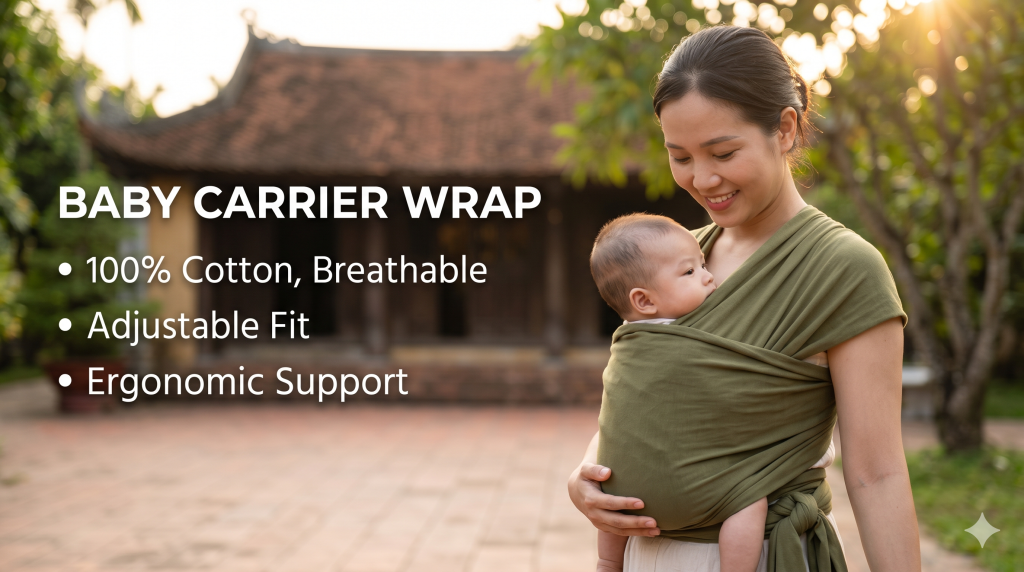
A baby wrap carrier is one of the most popular newborn essentials for modern parents who want to keep their baby close while staying hands-free. Instead of carrying your baby in your arms all day, a wrap distributes the weight across your body using soft fabric, allowing you to move more freely while maintaining close contact with your newborn.
Often described as a “second womb,” baby wraps are especially designed for the early months of life when babies need constant comfort, warmth, and security.
But the key question is: is a baby wrap carrier really comfortable and practical for everyday use, or does it take too much effort to be worth it?
Let’s take a detailed look.
What Is a Baby Wrap Carrier?
A baby wrap carrier is a long piece of soft, stretchy or woven fabric that is tied around the parent’s body to create a secure pouch for holding the baby.
Unlike structured carriers with buckles and frames, a wrap:
- Molds around the parent’s body
- Adjusts to the baby’s size
- Creates a snug, custom fit
- Requires manual wrapping and tying
Most wraps are designed specifically for newborns and infants, typically supporting babies from birth up to around 8–12 kg depending on the model.
There are also different types:
- Stretchy wraps (best for newborns)
- Woven wraps (more supportive, longer use)
- Hybrid wraps (combination of both styles)
Why Baby Wraps Are So Popular for Newborns
New parents often choose baby wraps because they solve a very real problem: newborns want constant contact, but parents still need free hands.
Babywearing in general is widely recognized for supporting bonding and making daily life easier during the early months.
Main reasons parents choose wraps:
- Keeps baby close to the body
- Allows hands-free movement
- Helps soothe fussy newborns
- Supports breastfeeding on the go
- Encourages bonding and emotional connection
Many parents also find that babies fall asleep faster when wrapped because they feel secure and held.
Comfort for the Baby
1. Natural “womb-like” feeling
Baby wraps create a snug, curved position that closely mimics how babies are held in the womb. This helps newborns feel safe and calm.
2. Proper body positioning
A well-fitted wrap supports the baby’s spine and encourages the healthy “M-position” for hips, which is recommended for infant development.
3. Reduced crying and fussiness
Close physical contact helps regulate a baby’s temperature, heartbeat, and stress levels, often leading to calmer behavior.
4. Better sleep support
Many newborns fall asleep quickly in wraps because of gentle movement and body warmth.
Comfort for Parents
1. Weight distribution
Instead of carrying all weight on one arm, the wrap spreads the baby’s weight across:
- Shoulders
- Back
- Waist
This reduces strain compared to holding the baby directly.
2. Hands-free convenience
Parents can:
- Cook
- Walk
- Do light housework
- Care for other children
All while keeping the baby close.
3. Adjustable fit for different body types
One wrap can fit multiple caregivers because it is fully adjustable, unlike structured carriers that rely on fixed straps.
Ease of Use: The Learning Curve
This is where baby wraps can be both loved and criticized.
Advantages:
- Once learned, very secure and comfortable
- No hard buckles or clips
- Flexible fit for newborns
Challenges:
- Requires practice to tie correctly
- Can feel overwhelming at first
- Needs proper positioning for safety
Many parents say the first few tries feel confusing, but after a few uses, it becomes a quick routine.
Some newer “pre-tied” wraps try to reduce this learning curve, making them easier to put on like a T-shirt style carrier.
Safety Considerations
Baby wraps are safe when used correctly, but proper positioning is essential.
Key safety rules:
- Baby’s face must always be visible
- Airway should be clear (chin not pressed to chest)
- Baby should be upright and snug
- Fabric should not cover nose or mouth
- Tight enough to prevent slumping
Experts emphasize correct positioning to avoid breathing obstruction risks, especially in newborns.
Safety is the most important factor—improper wrapping is the main cause of discomfort or risk.
Real-World Experience: What Parents Actually Say
In real usage, baby wraps are often described as:
Positive feedback:
- Extremely soothing for newborns
- Very comfortable for short to medium use
- Great for bonding and skin-to-skin contact
- Helpful during the “fourth trimester”
Some parents strongly prefer wraps during the newborn phase because of how natural and calming they feel.
Common complaints:
- Time-consuming to wrap at first
- Not ideal for hot weather
- Less convenient for quick in-and-out trips
- Limited support for heavier babies
Many users eventually switch to structured carriers as the baby grows.
How Long Can You Use a Baby Wrap?
Most baby wraps are best suited for:
- Birth to around 3–6 months (stretchy wraps)
- Up to 9–12 kg depending on material
After that, many parents transition to:
- Structured carriers
- Backpack-style carriers
- Hybrid slings
This is mainly due to weight distribution and ease of use as the baby becomes heavier.
Advantages of Baby Wrap Carriers
1. Excellent for newborn bonding
Promotes closeness and emotional attachment.
2. Soft and comfortable material
Usually made from cotton, bamboo, or modal fabrics.
3. Lightweight and portable
Easy to carry in a diaper bag.
4. Affordable compared to structured carriers
Often cheaper than high-end baby carriers.
5. Adaptable fit
One size fits most parents.
Limitations You Should Know
1. Learning curve
Takes practice to wrap correctly and safely.
2. Not ideal for long outdoor walks
Can become tiring compared to structured carriers.
3. Warm in hot weather
Multiple fabric layers can increase body heat.
4. Less support for older babies
As babies gain weight, wraps become less practical.
Who Should Use a Baby Wrap Carrier?
Baby wraps are ideal for:
- Newborn parents
- First-time parents learning babywearing
- Parents who prioritize bonding
- Home-based caregiving
- Light daily movement and chores
They are less ideal for:
- Heavy outdoor activity
- Long travel walks
- Older or heavier babies
Is a Baby Wrap Carrier Worth It?
Yes—a baby wrap carrier is absolutely worth it for the newborn stage, especially for parents who want closeness and flexibility.
It provides:
- Strong emotional bonding
- Hands-free convenience
- Comfortable newborn support
- Easy calming for fussy babies
However, it is not a permanent replacement for all types of baby carriers. Many parents treat it as a first-stage carrier, then switch later as the baby grows.
Final Verdict
A baby wrap carrier is one of the most effective tools for early parenthood, especially during the newborn phase. It offers a unique combination of comfort, closeness, and practicality that structured carriers often cannot match in the first months.
While it does require some learning and is less convenient for long-term or heavy use, its benefits in bonding and newborn comfort are undeniable.
In conclusion:
A baby wrap carrier is a highly valuable newborn essential, offering hands-free convenience and emotional connection during one of the most demanding stages of parenting. For many families, it becomes one of the most-used and most-appreciated baby products in the early months.
