
Post
Resistance Bands Set Review: Your Home Gym in a Bag
May
Resistance Bands Set have moved from being simple rehabilitation tools in physical therapy clinics to becoming one of the most popular pieces of home fitness equipment. A complete resistance bands set is often marketed as a “home gym in a bag”, and in many cases, that description is surprisingly accurate.
Unlike bulky gym machines or expensive dumbbells, Resistance Bands Set are lightweight, portable, and extremely versatile. They can be used for strength training, fat loss, mobility work, injury recovery, and even full-body workouts at home or while traveling.
But the real question is: can Resistance Bands Set actually replace traditional gym equipment, or are they just a convenient backup option?
Let’s take a detailed, realistic look.
What Is a Resistance Bands Set?
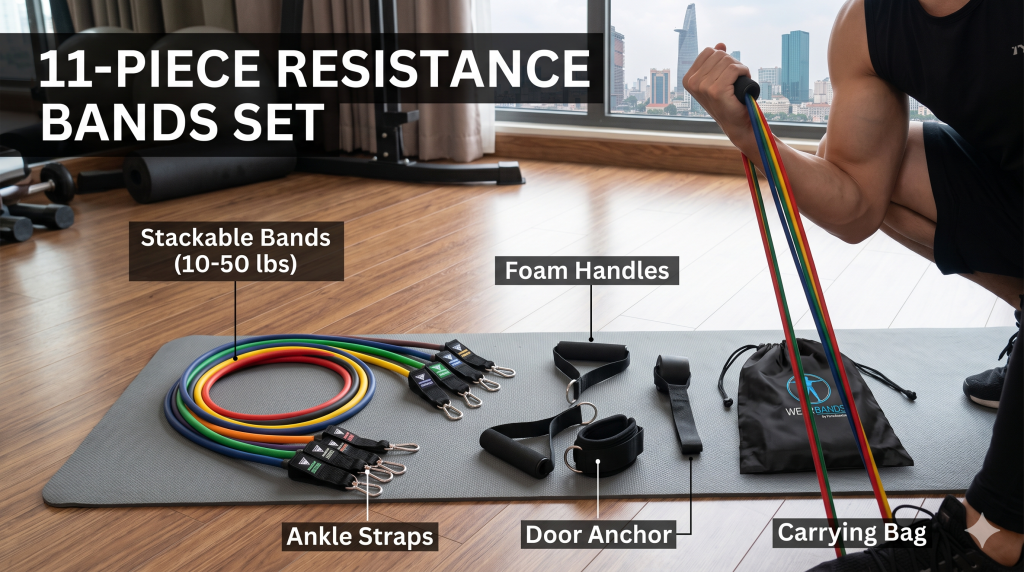
A resistance bands set typically includes multiple elastic bands with different resistance levels, allowing users to adjust workout intensity.
Most standard sets include:
- Light resistance band
- Medium resistance band
- Heavy resistance band
- Extra heavy or stackable bands
- Handles for grip exercises
- Ankle straps for leg training
- Door anchor for home workouts
- Carrying bag for portability
Some advanced sets also allow bands to be combined for higher resistance, simulating heavier weights.
The idea is simple: instead of buying multiple machines or weights, you get one compact system that supports a full-body workout.
Why Resistance Bands Are So Popular
Resistance Bands Set are popular because they solve three major fitness problems:
1. Space limitations
Not everyone has space for a home gym. Bands require almost no storage space and can fit in a small bag.
2. Cost efficiency
A full resistance band set costs significantly less than dumbbells, machines, or gym memberships.
3. Versatility
One set can be used for:
- Strength training
- Stretching and mobility
- Rehabilitation exercises
- Warm-ups and activation drills
- Full-body workouts
This flexibility makes them suitable for almost any fitness level.
How Resistance Bands Actually Work
Resistance bands operate on a different principle compared to free weights.
F=kxF = kx
In simple terms:
- The more you stretch the band, the more resistance it creates
- Resistance increases throughout the movement
- Muscles stay under tension for longer periods
This is different from dumbbells, where weight remains constant throughout the exercise.
Key difference:
- Dumbbells = constant resistance
- Bands = variable resistance
This constant tension can make exercises feel harder at the peak of movement, especially during chest presses, squats, or rows.
Key Benefits of Resistance Bands
1. Full-Body Training in One Kit
A single resistance bands set allows you to train nearly every muscle group:
- Chest (pressing movements)
- Back (pulling exercises)
- Shoulders (raises and rotations)
- Arms (biceps and triceps)
- Legs and glutes (squats, kickbacks)
- Core (twists and stability work)
This makes it a complete training system for home users.
2. Extremely Portable
One of the biggest advantages is portability.
You can:
- Train in a small apartment
- Exercise in a hotel room
- Work out outdoors
- Bring it while traveling
Everything fits into a small bag, making it ideal for people with busy lifestyles.
3. Joint-Friendly Training
Resistance bands are known for being easier on joints compared to heavy weights.
They are widely used in:
- Physical therapy
- Injury recovery programs
- Low-impact training routines
Because resistance increases gradually, there is less sudden stress on joints.
Many fitness professionals recommend bands for people recovering from injuries or those who want safer training alternatives.
4. Effective for Strength and Muscle Building
A common misconception is that resistance bands are only for light workouts.
In reality:
- They can build muscle
- They support progressive overload
- They improve muscular endurance
When used correctly with proper resistance levels, bands can be effective for hypertrophy and strength training.
5. Great for Beginners and Advanced Users
Resistance bands work for all fitness levels:
Beginners benefit from:
- Easy movement learning
- Low injury risk
- Simple resistance progression
Advanced users benefit from:
- High-rep training
- Burnout sets
- Isolation exercises for weak muscles
This makes them adaptable to different training goals.
Real Workout Experience
In real use, resistance bands feel different from gym equipment.
Chest exercises:
Push movements create strong tension at full extension, often feeling harder than expected.
Back exercises:
Pulling bands activates stabilizing muscles because of constant tension.
Leg workouts:
Squats and glute exercises become highly intense when bands are properly anchored.
Overall feel:
- Smooth resistance
- Continuous muscle engagement
- No momentum cheating like some weight exercises
This leads to better control and muscle activation for many users.
Limitations of Resistance Bands
Despite their benefits, resistance bands are not perfect.
1. Harder to track progress
Unlike dumbbells, resistance levels are less precise.
2. Durability concerns
Lower-quality bands may:
- Lose elasticity
- Tear over time
- Snap under heavy use
3. Not ideal for maximum strength training
For heavy lifting goals (like powerlifting), bands cannot fully replace free weights.
4. Technique sensitivity
Incorrect form reduces effectiveness significantly.
5. Resistance inconsistency across brands
Not all “heavy” bands feel the same, making standardization difficult.
Types of Resistance Bands
1. Loop Bands
- Best for lower body training
- Common in fitness and rehab
- Simple and effective
2. Tube Bands with Handles
- Most versatile type
- Suitable for full-body workouts
- Often used for home gyms
3. Fabric Bands
- Comfortable and non-slip
- Great for glutes and legs
- Popular in fitness routines
Many complete sets combine all types for maximum flexibility.
Common Mistakes Users Make
1. Using too little resistance
Many beginners underestimate how strong bands can be.
2. Poor anchoring setup
Incorrect door anchor use can limit exercise range and safety.
3. Fast, uncontrolled movements
Bands require controlled motion for effectiveness.
4. No progressive overload
Without increasing resistance or reps, results plateau.
5. Ignoring form
Bad posture reduces muscle activation and increases injury risk.
Who Should Use Resistance Bands?
Resistance bands are ideal for:
- Home workout users
- Beginners in fitness
- Busy professionals
- Travelers
- Injury recovery users
- People with limited space
They are less ideal for:
- Heavy strength athletes
- Professional bodybuilding programs
- Powerlifting-focused training
Are Resistance Bands Worth It?
Yes—resistance bands sets are absolutely worth it for most people.
They provide:
- Full-body training capability
- Excellent portability
- Low cost entry into fitness
- Joint-friendly workouts
- High versatility for different goals
While they may not fully replace gym equipment for advanced lifters, they are extremely effective for general fitness, fat loss, and muscle toning.
Final Verdict
A resistance bands set truly earns the title of “home gym in a bag.”
It may look simple, but it delivers a powerful and flexible training system that can replace many traditional workout tools for everyday fitness needs.
When used correctly, resistance bands can:
- Build muscle
- Improve endurance
- Enhance mobility
- Support rehabilitation
- Enable consistent workouts anywhere
In conclusion, a resistance bands set is one of the most practical, affordable, and space-saving fitness investments available today, especially for anyone looking to stay fit without relying on a traditional gym.
