
Post
Non-Slip Yoga Mat Review: Why Thickness and Grip Matter
May
At first glance, a yoga mat may seem simple. However, not all yoga mats are created equal. Two of the most important features that determine comfort, performance, and safety are thickness and grip. A high-quality non-slip yoga mat can improve stability, protect joints, and make every workout more enjoyable.
For beginners and experienced yogis alike, choosing the right mat is more important than many people realize. A poor-quality mat may slide during poses, cause discomfort, or fail to provide enough support. In contrast, a well-designed non-slip yoga mat creates confidence, comfort, and better overall performance.
This review explores why thickness and grip matter so much and how the right yoga mat can completely transform your practice.
First Impressions and Design
The first thing most people notice about a yoga mat is its texture and appearance. Modern non-slip yoga mats come in a wide variety of colors, patterns, and materials, ranging from minimalist neutral tones to vibrant artistic designs.
A quality yoga mat immediately feels more durable and comfortable compared to cheaper alternatives. The surface texture often provides a slightly firm grip that helps users feel stable during movement. At the same time, the cushioning underneath creates a sense of comfort and support.
Most premium yoga mats are designed to balance softness with stability. A mat that feels too soft may reduce balance, while one that is too thin may feel uncomfortable during floor exercises.
Another important design feature is portability. Many yoga mats are lightweight and easy to roll up, making them convenient for travel, gym sessions, or studio classes. Some even include carrying straps or storage bags for added convenience.
Overall, the best non-slip yoga mats combine comfort, functionality, and style into one practical fitness accessory.
Why Grip Matters During Yoga Practice
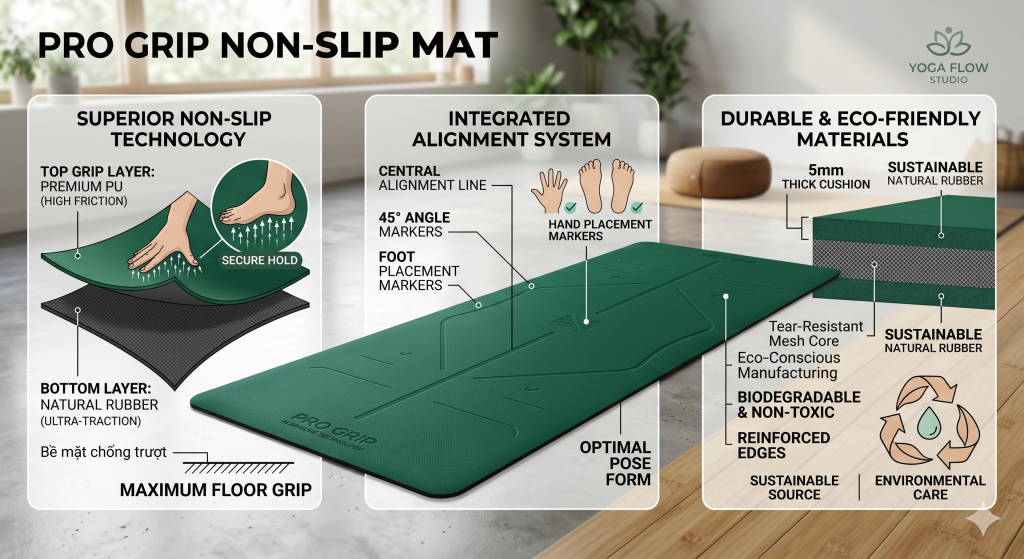
Grip is arguably the most important feature of any yoga mat. During yoga sessions, people constantly shift body weight through different poses, stretches, and movements. Without proper traction, the hands and feet may slide, making poses difficult and potentially unsafe.
A non-slip surface helps maintain stability during exercises such as downward dog, plank, warrior poses, and balance movements. This stability allows users to focus on breathing and posture instead of worrying about slipping.
Sweat can make the problem even worse. During hot yoga or intense workouts, moisture may cause low-quality mats to become slippery. High-quality non-slip mats are specifically designed to maintain traction even when exposed to sweat.
Better grip also improves confidence, especially for beginners. New yoga practitioners often struggle with balance and coordination. A stable surface makes it easier to hold poses correctly and reduces fear of falling.
For advanced yogis, grip becomes even more important during complex movements and transitions. Strong traction supports smoother motion and better body control.
Ultimately, grip directly affects safety, performance, and comfort throughout the entire workout experience.
The Importance of Thickness and Cushioning
While grip provides stability, thickness determines comfort and joint protection. Yoga involves many floor-based movements that place pressure on sensitive areas such as knees, wrists, elbows, hips, and ankles.
A mat that is too thin may cause discomfort, especially during longer sessions or on hard floors. Insufficient cushioning can lead to soreness and reduce overall enjoyment of the practice.
Thicker yoga mats provide extra padding that absorbs pressure and improves comfort. This is particularly beneficial for beginners, older adults, or individuals with joint sensitivity.
For example, poses that require kneeling become much more comfortable with additional cushioning. Floor stretches and seated meditation positions also feel more supportive on a thicker surface.
However, thickness must be balanced carefully. Extremely thick mats may reduce stability because the soft surface makes balancing poses more difficult. The best yoga mats find the right balance between cushioning and firmness.
Typically, medium-thickness mats are considered ideal for most users because they offer both comfort and stability. These mats work well for yoga, stretching, Pilates, and general fitness exercises.
People who primarily practice restorative yoga or floor exercises may prefer slightly thicker mats, while those focused on advanced balance poses may choose thinner options for greater stability.
Choosing the right thickness depends on personal preference, exercise style, and comfort needs.
Comfort Improves Consistency and Motivation
One overlooked benefit of a high-quality yoga mat is how it affects motivation. Exercise routines are easier to maintain when the experience feels comfortable and enjoyable.
An uncomfortable mat can quickly discourage regular practice. Slipping hands, sore knees, and poor support make workouts frustrating instead of relaxing. Over time, these small discomforts may reduce consistency.
In contrast, a supportive non-slip yoga mat creates a more pleasant and professional feeling environment. Comfortable workouts encourage users to spend more time practicing and staying active.
Many people also use yoga mats for activities beyond yoga itself, including stretching, meditation, home workouts, bodyweight exercises, and relaxation routines. A comfortable mat becomes a versatile wellness tool used daily.
For remote workers or students who spend long hours sitting, having a quality mat nearby can encourage short stretching breaks throughout the day.
Comfort may seem like a small detail, but it plays a major role in building healthy long-term fitness habits.
Durability and Material Quality
A yoga mat is an investment in both fitness and comfort, so durability matters. Cheap mats often wear out quickly, lose grip, or begin peeling after repeated use.
High-quality non-slip yoga mats are usually made from durable materials designed to withstand frequent workouts. Common materials include natural rubber, TPE (thermoplastic elastomer), PVC, or eco-friendly blends.
Durable mats maintain their texture and cushioning over time, even after months of use. They are also easier to clean and less likely to absorb sweat or odors.
Material quality also affects environmental impact. Many modern yoga brands now produce eco-friendly mats using recyclable or biodegradable materials. These products appeal to environmentally conscious consumers who want sustainable fitness equipment.
Another advantage of premium materials is odor resistance. Lower-quality mats sometimes produce strong chemical smells, especially when new. Better materials typically feel safer, cleaner, and more comfortable.
Investing in a durable yoga mat often saves money long-term because it reduces the need for frequent replacements.
Portability and Everyday Convenience
Modern lifestyles require flexibility, and yoga mats are no exception. Many users travel between home, yoga studios, gyms, and outdoor locations, so portability is important.
Most non-slip yoga mats are lightweight enough to carry easily while still maintaining enough thickness for comfort. Rollable designs allow convenient storage in closets, gym lockers, or travel bags.
Some mats include carrying straps, handles, or protective covers that improve transportation and organization.
Portable yoga mats are especially useful for people who enjoy outdoor workouts in parks or at the beach. Having a reliable mat makes it easier to practice anywhere comfortably.
Convenience encourages regular exercise by removing barriers and making fitness routines more accessible.
Final Verdict
A non-slip yoga mat is far more important than many people initially realize. Grip and thickness directly influence comfort, safety, balance, and overall workout quality.
Strong grip improves stability and confidence during movement, while proper thickness protects joints and enhances comfort. Together, these features create a safer and more enjoyable yoga experience for both beginners and experienced practitioners.
Beyond yoga itself, high-quality mats also support stretching, meditation, Pilates, home workouts, and relaxation routines. Their versatility makes them valuable additions to any fitness lifestyle.
When choosing a yoga mat, investing in quality is worth it. A durable, comfortable, and supportive mat not only improves physical performance but also encourages consistency and long-term wellness habits.
Whether you practice yoga daily or simply want a reliable surface for exercise and stretching, a non-slip yoga mat with the right thickness and grip can make a noticeable difference in your fitness journey.
