
Post
Air Purifier for Home – Does It Really Help with Allergies?
May
But marketing often makes them sound more powerful than they actually are. Some brands imply they can “solve allergies completely,” while others present them as essential for every home.
The reality is more realistic: air purifiers can significantly reduce allergy symptoms in many cases, but they do not eliminate allergies or replace proper cleaning and medical care.
To understand their true value, we need to go deeper into how they work, what they actually remove from the air, and what results you can realistically expect.
How Air Purifiers Work in Real Life
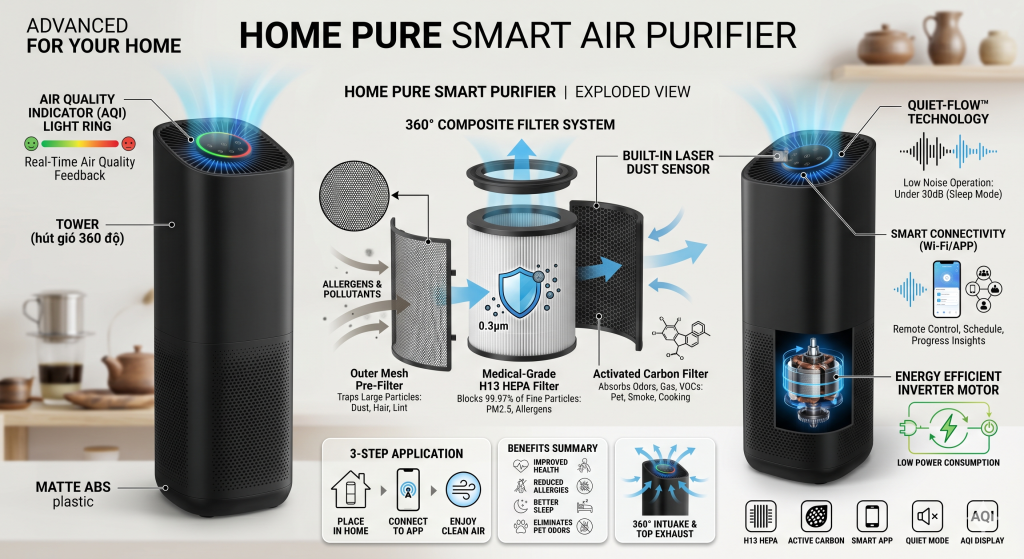
An air purifier continuously circulates indoor air through a filtration system. The process is usually:
- Air is pulled into the device
- It passes through multiple filters
- Particles are trapped inside the filters
- Cleaned air is released back into the room
The most important filter in allergy control is the HEPA filter (High Efficiency Particulate Air filter).
A true HEPA filter is capable of capturing extremely small particles, including dust, pollen, pet dander, and mold spores. It can trap around 99.97% of particles as small as 0.3 microns, which covers most common indoor allergens.
This is why HEPA-based purifiers are widely recommended for allergy sufferers.
What Causes Indoor Allergies in the First Place?
To understand whether air purifiers help, we first need to understand where allergies come from indoors.
Common triggers include:
- Dust mites in bedding and furniture
- Pet dander (skin flakes, hair, saliva particles)
- Pollen entering from outside
- Mold spores in damp areas
- Smoke or cooking particles
The key point is that many of these allergens are airborne at some point, even if only temporarily.
Air purifiers mainly target this airborne phase—not allergens already settled on surfaces.
How Much Do Air Purifiers Actually Help with Allergies?
The realistic answer: Moderate to significant improvement, not a cure.
Most users experience improvement in symptoms such as:
- Less sneezing in the morning
- Reduced nasal congestion
- Fewer nighttime allergy flare-ups
- Easier breathing in closed rooms
- Better sleep quality
Clinical and user-based studies suggest that reducing airborne allergens indoors can noticeably improve quality of life for allergy sufferers, especially when HEPA filtration is used consistently.
However, results vary depending on:
- Severity of allergies
- Type of allergen
- Room size
- Device quality
- Usage habits
Why Air Purifiers Work Better for Some Allergies Than Others
Not all allergies respond the same way to air purification.
1. Pollen Allergies (Very Responsive)
Air purifiers are especially effective for pollen because it is lightweight and easily airborne. Keeping windows closed and running a purifier can significantly reduce indoor pollen levels.
2. Pet Allergies (Moderately Responsive)
Pet dander floats in the air and can be filtered out effectively, but it also settles on furniture and fabrics, which requires cleaning.
3. Dust Allergies (Partially Responsive)
Dust is a mix of particles, some airborne and some settled. Air purifiers help with airborne dust but not dust trapped in carpets or bedding.
4. Mold Allergies (Conditionally Responsive)
Air purifiers can reduce airborne spores, but they do not fix the moisture source causing mold growth.
The Importance of HEPA Filtration Quality
One of the most critical factors is whether the purifier uses true HEPA technology or just “HEPA-like” marketing.
True HEPA filters:
- Capture very fine particles
- Maintain consistent filtration efficiency
- Are certified to performance standards
Fake or “HEPA-type” filters:
- May capture larger particles only
- Have inconsistent performance
- Often used in cheaper devices
Experts strongly recommend using true HEPA filters for allergy control, as lower-quality filters may not provide noticeable symptom relief.
Real-World Performance: What Users Actually Experience
In everyday use, results depend heavily on setup and consistency.
Positive experiences:
- Noticeably cleaner indoor air
- Reduced allergy symptoms over time
- Better sleep quality
- Less morning congestion
- Improved comfort in bedrooms
Some users even report reduced reliance on allergy medication when using air purifiers consistently in their sleeping area.
Mixed experiences:
- Little improvement in large, open spaces
- No change if filters are not maintained
- Limited effect if allergens are mostly on surfaces
Where Air Purifiers Work Best in the Home
Air purifiers are most effective in controlled, enclosed spaces.
Best locations:
- Bedrooms (most important)
- Small living rooms
- Home offices
- Nurseries or children’s rooms
- Pet sleeping areas
The bedroom is the most critical because you spend 6–8 hours breathing the same air while sleeping.
Common Reasons People Think Air Purifiers “Don’t Work”
Many negative reviews come from misuse rather than product failure.
1. Wrong Room Size
Using a small purifier in a large room drastically reduces effectiveness.
2. Poor Placement
Placing the device in corners or behind furniture blocks airflow.
3. Infrequent Use
Air purifiers need to run continuously for stable air quality.
4. Dirty or Old Filters
Clogged filters reduce performance significantly.
5. Unrealistic Expectations
Expecting instant allergy elimination leads to disappointment.
What Air Purifiers Cannot Do
It is important to understand their limitations clearly.
They cannot:
- Cure allergies or asthma
- Remove allergens stuck in carpets or bedding
- Replace vacuuming or cleaning
- Fix structural issues like mold sources
- Work instantly like medication
Air purifiers are support devices, not medical treatments.
Do You Still Need Cleaning If You Use One?
Yes—cleaning remains essential.
For best results, you should still:
- Vacuum regularly (preferably with HEPA vacuum)
- Wash bedding weekly
- Reduce indoor dust buildup
- Control humidity levels
- Remove mold sources if present
An air purifier works best as part of a larger indoor air quality strategy.
Energy Use and Maintenance
Air purifiers are generally:
- Low to moderate energy consumers
- Safe for continuous 24/7 operation
- Require filter replacement every 3–12 months (depending on usage)
Maintenance is simple but important. A neglected filter can significantly reduce performance and even worsen air quality.
Is It Worth Buying an Air Purifier for Allergies?
Yes, if:
- You suffer from dust, pollen, or pet allergies
- You want better sleep quality
- You spend most time indoors
- You can invest in a proper HEPA model
- You are willing to maintain it properly
Maybe not, if:
- Your allergies are very mild
- Your symptoms are mainly skin-contact related
- You expect complete elimination of allergies
- You cannot maintain filters regularly
Final Verdict
An air purifier for home does help with allergies, but in a controlled and realistic way.
It works by reducing airborne allergens such as pollen, dust, and pet dander, which directly lowers exposure and can significantly improve comfort—especially in bedrooms and small enclosed spaces.
However, it is not a standalone solution. It cannot eliminate allergens already settled in your home, and it cannot replace cleaning habits or medical treatment.
In conclusion:
- It reduces exposure, not eliminates allergies
- It is most effective with true HEPA filtration
- It works best in small, closed rooms with consistent use
- It should be part of a complete allergy management routine
When used correctly, an air purifier becomes a powerful support tool that can noticeably improve daily comfort, sleep quality, and overall indoor air health—especially for people with ongoing allergy issues.
