
Post
Orthopedic Dog Bed Review: Does It Really Help Joint Pain?
May
Orthopedic Dog Bed: Does It Really Help Dogs With Joint Pain?
An dog bed has become one of the most recommended comfort products for aging dogs and pets with joint problems. As dogs grow older, their bodies naturally change—joints become stiffer, cartilage wears down, and conditions like arthritis or hip dysplasia become more common.
Because dogs spend such a large portion of their lives resting, their sleeping surface directly affects comfort, recovery, and long-term mobility. A poor-quality bed can increase pressure on joints, while a supportive dog bed may reduce discomfort and improve daily movement.
But does an dog bed actually work, or is it mostly marketing?
The answer is more nuanced than a simple yes or no. In many real-world cases, a properly designed dog bed can genuinely improve comfort and reduce stiffness—especially for senior dogs.
What Is an Orthopedic Dog Bed?
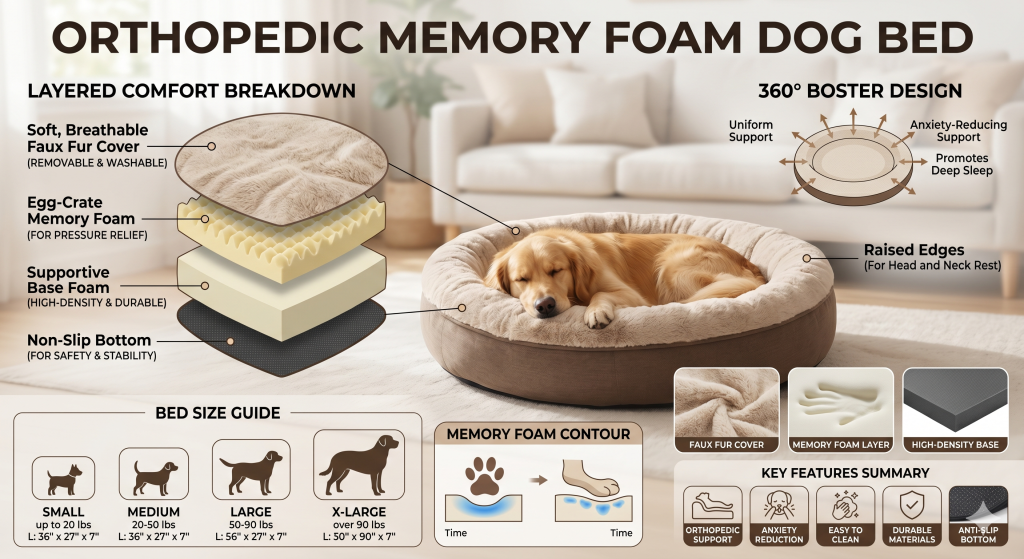
An dog bed is specifically designed to support a dog’s bones, joints, and spine using pressure-relieving materials instead of simple stuffing or thin padding.
Most high-quality orthopedic beds use:
- High-density memory foam
- Multi-layer support foam
- Pressure-relief construction systems
Unlike standard pet beds, an dog bed distributes body weight more evenly across the surface.
This helps reduce pressure on sensitive areas such as:
- Hips
- Elbows
- Shoulders
- Spine
Veterinary and pet care experts often recommend orthopedic beds for dogs suffering from arthritis, hip dysplasia, or mobility issues because they provide more structured support than traditional soft beds.
How an Orthopedic Dog Bed Helps Reduce Joint Pain
To understand why an dog bed works, it helps to understand how joint discomfort develops during rest.
When a dog lies on a soft or thin surface, body weight concentrates on pressure points rather than being evenly supported.
This can increase:
- Joint stiffness
- Pain during sleep
- Difficulty standing up afterward
A quality dog bed addresses these issues in several important ways.
1. Better Pressure Distribution
High-density foam spreads the dog’s weight evenly across the bed.
Instead of pressure building in one location, the foam absorbs and redistributes force more effectively.
This reduces stress on painful joints during long periods of rest.
2. Improved Support for Aging Joints
As dogs age, joints lose natural cushioning.
An dog bed acts as an external support system that compensates for this loss by reducing impact against hard surfaces.
This extra support is especially important for:
- Senior dogs
- Large breeds
- Dogs with arthritis
- Dogs recovering from surgery
3. Better Sleeping Posture
A supportive dog bed encourages healthier spinal alignment.
Instead of twisting awkwardly or sinking too deeply into soft padding, the dog’s body stays more naturally positioned during sleep.
This may reduce stiffness after waking up.
4. Reduced Morning Stiffness
One of the most commonly reported improvements from pet owners is reduced stiffness after rest.
Many dogs appear to:
- Stand up more easily
- Walk more comfortably
- Move with less hesitation
after switching to a supportive dog bed.
Do Dogs Actually Notice the Difference?
In many real-world situations, yes.
Pet owners often report noticeable changes after introducing an dog bed, especially for older pets.
Common improvements include:
- Dogs choosing the new bed over other surfaces
- Longer and deeper sleep periods
- Less limping after naps
- Easier movement after resting
- Reduced hesitation when standing
However, younger healthy dogs may not show dramatic changes because they do not yet require advanced joint support.
The biggest benefits are usually seen in dogs with existing joint discomfort or mobility problems.
What Makes a Good Orthopedic Dog Bed?
Not all products labeled “orthopedic” actually provide proper support.
The effectiveness of an orthopedic dog bed depends heavily on build quality.
Foam Density Is the Most Important Factor
The most important feature of an orthopedic dog bed is foam quality.
High-density memory foam:
- Maintains shape under pressure
- Prevents sinking
- Provides long-term support
Cheap low-density foam often collapses quickly and loses effectiveness.
This is why some inexpensive “orthopedic” beds fail to deliver real benefits.
Bed Thickness Matters
Thickness affects how well the orthopedic dog bed protects joints from hard flooring.
Recommended thickness:
- Small dogs → 2–3 inches
- Medium dogs → 3–5 inches
- Large dogs → 5–7 inches or more
A thin bed may still allow pressure against the floor underneath.
Multi-Layer Construction Improves Support
Many premium orthopedic dog beds use layered designs:
- Soft comfort layer
- Supportive middle foam
- Firm base foundation
This creates a balance between softness and stability.
Bed Shape and Edge Support
Different orthopedic dog bed shapes serve different purposes.
Flat Beds
Best for dogs that like stretching out.
Bolstered Beds
Provide extra neck and head support.
Dogs with anxiety or stiffness often prefer raised edges because they feel more secure.
Waterproof and Non-Slip Features
Older dogs benefit greatly from stable surfaces.
A non-slip base prevents movement when entering or exiting the orthopedic dog bed, reducing strain on weak joints.
Waterproof liners are also useful for:
- Senior dogs
- Dogs recovering from surgery
- Dogs with accidents or incontinence
Real-World Experiences From Dog Owners
Most real-world feedback about orthopedic dog beds is positive, especially for aging pets.
Common Positive Experiences
- Dogs sleep longer and more comfortably
- Less stiffness after naps
- Easier mobility in the morning
- Dogs prefer the orthopedic bed over floors or couches
Mixed Experiences
- Some dogs need adjustment time
- Cheap foam flattens quickly
- Certain dogs prefer cooler sleeping surfaces
One repeated conclusion among owners is that foam quality matters far more than marketing claims.
Limitations of Orthopedic Dog Beds
Although an orthopedic dog bed can improve comfort, it is not a medical cure.
An orthopedic bed cannot:
- Cure arthritis
- Reverse joint degeneration
- Replace veterinary treatment
- Eliminate severe chronic pain completely
Instead, it works best as a supportive comfort tool.
Another limitation is inconsistent product quality. Some beds use the word “orthopedic” mainly for marketing despite offering little actual support.
Who Should Buy an Orthopedic Dog Bed?
An orthopedic dog bed is ideal for:
- Senior dogs
- Large breeds
- Dogs with arthritis
- Dogs recovering from surgery
- Dogs with hip dysplasia
- Pets with mobility issues
It may be less necessary for:
- Young healthy dogs
- Temporary use situations
- Owners seeking very low-cost bedding only
Is an Orthopedic Dog Bed Worth It?
Yes—especially for dogs with joint discomfort or aging-related stiffness.
A high-quality orthopedic dog bed can provide:
- Better joint support
- Improved sleep quality
- Reduced pressure points
- Easier mobility after rest
- Greater long-term comfort
For many dogs, these improvements noticeably improve daily quality of life.
Final Verdict on Orthopedic Dog Beds
An orthopedic dog bed is not just a luxury pet accessory—it can genuinely improve comfort, support, and mobility for dogs with aging joints or arthritis.
In Summary
- Reduces pressure on joints
- Supports healthier sleeping posture
- Helps reduce stiffness after rest
- Improves comfort for senior dogs
- Works best with high-density memory foam
Final conclusion:
A high-quality orthopedic dog bed is absolutely worth considering for senior dogs and pets with joint issues. While it is not a miracle cure, it is a practical long-term comfort upgrade that can help dogs sleep better, move more comfortably, and experience less joint stress over time.
External Resources
