
Post
Air Purifiers for Home – Does It Really Help with Allergies?
May
Do Air Purifiers Really Help with Allergies? A Real-World Breakdown
Air purifiers have become one of the most popular home wellness devices in recent years, especially among people dealing with allergies, asthma, or generally poor indoor air quality. The concept sounds simple and appealing: clean the air you breathe indoors and reduce exposure to harmful particles that trigger allergic reactions.
However, marketing often makes these devices sound more powerful than they actually are. Some brands imply that air purifiers can “solve allergies completely,” while others present them as essential for every household regardless of need.
The reality is more balanced and realistic: air purifiers can significantly reduce allergy symptoms in many cases, but they do not eliminate allergies or replace proper cleaning habits and medical care.
To understand their true value, we need to go deeper into how they work, what they actually remove from the air, and what results you can realistically expect in everyday life.
How Air Purifiers Work in Real Life
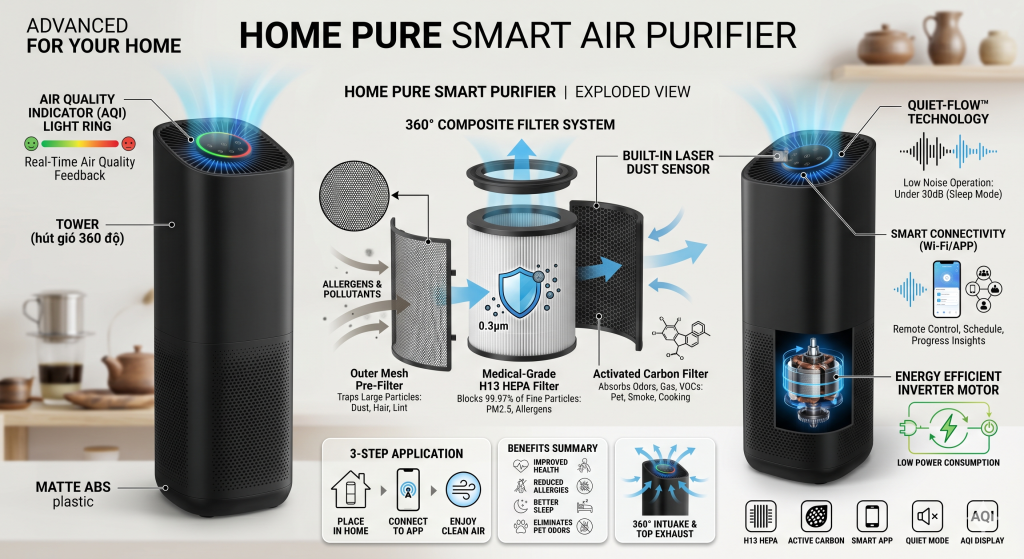
An air purifier functions by continuously circulating indoor air through a built-in filtration system. The basic process is simple but effective:
- Air is drawn into the device
- It passes through one or more filters
- Harmful particles are trapped inside
- Clean air is released back into the room
The most important component for allergy control is the HEPA filter (High Efficiency Particulate Air filter).
A true HEPA filter is designed to capture extremely small airborne particles, including dust, pollen, pet dander, and mold spores. It can trap approximately 99.97% of particles as small as 0.3 microns, which includes most common indoor allergens.
This level of filtration is why HEPA-based purifiers are widely recommended for allergy sufferers and frequently used in hospitals, clinics, and clean environments.
What Actually Causes Indoor Allergies?
To understand whether air purifiers are effective, it is important to first identify where indoor allergies come from.
Common triggers include:
- Dust mites in mattresses, pillows, and furniture
- Pet dander (tiny skin flakes, saliva, and hair particles)
- Pollen entering from outdoor air
- Mold spores in damp or poorly ventilated areas
- Smoke, cooking fumes, and airborne chemicals
The key issue is that many of these allergens become airborne at some point, even if only temporarily.
Air purifiers primarily target this airborne stage. They do not remove allergens already settled deep inside fabrics, carpets, or surfaces—that requires cleaning.
How Much Do Air Purifiers Actually Help with Allergies?
The most realistic answer is: moderate to significant improvement, but not a cure.
Most users report noticeable improvements such as:
- Reduced sneezing, especially in the morning
- Less nasal congestion during sleep
- Fewer nighttime allergy flare-ups
- Easier breathing in enclosed rooms
- Better overall sleep quality
Scientific studies and real-world feedback suggest that reducing airborne allergens indoors can meaningfully improve quality of life, especially when a true HEPA filter is used consistently.
However, results are not identical for everyone. Effectiveness depends on:
- Severity of allergies
- Type of allergen exposure
- Room size and airflow
- Quality of the device
- Consistency of use and maintenance
In other words, air purifiers are highly effective tools in the right conditions—but not universal solutions.
Why Air Purifiers Work Better for Some Allergies
Not all allergies respond equally to air purification. Understanding this difference is important for setting realistic expectations.
1. Pollen Allergies (Highly Responsive)
Pollen is lightweight and easily becomes airborne. Air purifiers are particularly effective at reducing indoor pollen levels, especially when windows are kept closed and the device runs continuously.
Many users with seasonal allergies experience noticeable relief in bedrooms and small rooms.
2. Pet Allergies (Moderately Responsive)
Pet dander floats in the air and can be captured by filters effectively. However, it also settles on furniture, bedding, and carpets.
This means air purifiers help reduce airborne exposure, but regular cleaning is still necessary for full control.
3. Dust Allergies (Partially Responsive)
Dust is a mixture of particles, some airborne and some settled. Air purifiers reduce airborne dust, but they cannot remove dust embedded in fabrics or surfaces.
For best results, they must be combined with regular vacuuming and cleaning.
4. Mold Allergies (Conditionally Responsive)
Air purifiers can reduce airborne mold spores, which helps improve air quality. However, they do not eliminate the root cause of mold growth—moisture and humidity.
Without fixing the source, mold will continue producing spores.
The Importance of True HEPA Filtration
One of the most important factors when choosing an air purifier is whether it uses a certified true HEPA filter or just “HEPA-type” marketing.
True HEPA filters:
- Capture extremely fine particles
- Follow strict performance standards
- Deliver consistent filtration efficiency
- Are tested and certified
HEPA-like or fake HEPA filters:
- Often capture only larger particles
- Have inconsistent performance
- May not meet true filtration standards
- Common in cheaper devices
For allergy control, experts strongly recommend true HEPA filtration, as lower-quality filters often fail to produce noticeable symptom relief.
Real-World Performance: What Users Experience
In practical daily use, results vary depending on setup, usage habits, and environment.
Positive outcomes include:
- Cleaner indoor air
- Reduced allergy symptoms over time
- Better sleep quality
- Less morning congestion
- Improved comfort in bedrooms
Some users even report reduced dependence on allergy medication when using air purifiers consistently in sleeping areas.
Mixed or limited results often occur when:
- The device is too small for the room
- Filters are not replaced or cleaned regularly
- Allergens are mostly on surfaces rather than airborne
- Usage is inconsistent or occasional
This highlights a key point: performance depends heavily on correct usage.
Where Air Purifiers Work Best in the Home
Air purifiers are most effective in controlled, enclosed environments rather than large open spaces.
Best locations include:
- Bedrooms (highest priority)
- Small living rooms
- Home offices
- Nurseries or children’s rooms
- Pet sleeping areas
The bedroom is especially important because people spend 6–8 hours breathing the same air during sleep. Improvements in this space often lead to the most noticeable health benefits.
Why Some People Think Air Purifiers Don’t Work
Negative reviews are often caused by improper usage rather than device failure.
Common mistakes include:
1. Wrong room size
Using a small purifier in a large room reduces effectiveness significantly.
2. Poor placement
Placing the device behind furniture or in corners restricts airflow.
3. Infrequent operation
Air purifiers need continuous use to maintain stable air quality.
4. Dirty filters
Clogged filters reduce efficiency and airflow.
5. Unrealistic expectations
Expecting instant allergy elimination leads to disappointment.
What Air Purifiers Cannot Do
It is equally important to understand their limitations.
Air purifiers cannot:
- Cure allergies or asthma
- Remove allergens trapped in fabrics or carpets
- Replace cleaning routines
- Fix structural problems like mold sources
- Provide instant relief like medication
They are support devices, not medical treatments.
Do You Still Need Cleaning If You Use One?
Yes. Cleaning remains essential even with an air purifier.
For best results, users should still:
- Vacuum regularly (ideally with a HEPA vacuum)
- Wash bedding weekly
- Reduce dust buildup on surfaces
- Control indoor humidity
- Address mold sources directly
An air purifier works best as part of a complete indoor air quality strategy—not as a standalone solution.
Energy Use and Maintenance
Air purifiers are generally:
- Low to moderate energy consumers
- Safe for 24/7 continuous operation
- Require filter replacement every 3–12 months depending on usage
Maintenance is simple but critical. A neglected filter can reduce performance significantly and may even worsen air quality over time.
Is It Worth Buying an Air Purifier for Allergies?
Yes, if:
- You suffer from dust, pollen, or pet allergies
- You want improved sleep quality
- You spend most of your time indoors
- You choose a proper HEPA-certified model
- You are willing to maintain it regularly
Maybe not, if:
- Your allergies are very mild
- Your symptoms are mainly skin-contact related
- You expect complete elimination of allergies
- You cannot maintain filters properly
Final Verdict
An air purifier does help with allergies, but in a realistic and controlled way.
It works by reducing airborne allergens such as pollen, dust, and pet dander, which lowers exposure and can significantly improve comfort—especially in bedrooms and small enclosed spaces.
However, it is not a standalone solution. It does not remove allergens already settled in the home, and it cannot replace cleaning habits or medical treatment.
In summary:
- It reduces exposure, not eliminates allergies
- It works best with true HEPA filtration
- It is most effective in small, closed rooms with consistent use
- It should be part of a broader allergy management routine
When used correctly, an air purifier becomes a highly effective support tool that can noticeably improve daily comfort, sleep quality, and overall indoor air health—especially for people dealing with ongoing allergies.
